I had my first hysteroscopy (HSC) last month and really managed to freak myself out big time over it. I even lost sleep! I was convinced it was going to be this awful procedure because it involved a shot to numb the cervix.
The conversation with the nurse went something like this:
“You’ll be getting an HSC, where they will numb your cervix, here’s some prescriptions for pain, antibiotics and anxiety.”
Immediately my anxiety shoots through the roof and I’m like, whoah, back up, tell me more about how this “numbing” will occur.
“They will give you a shot in your cervix”
I think I may have just fallen out of my chair at that moment. You’d think since I’d given myself shots in the belly for nearly two weeks with the last procedure that needles would not bother me.
But for some reason, the thought of this needle deep in my sensitive and personal area, just put me over the edge. I had managed to escape the HSG experience by having it done during the lap surgery, but I was not getting away with this one!
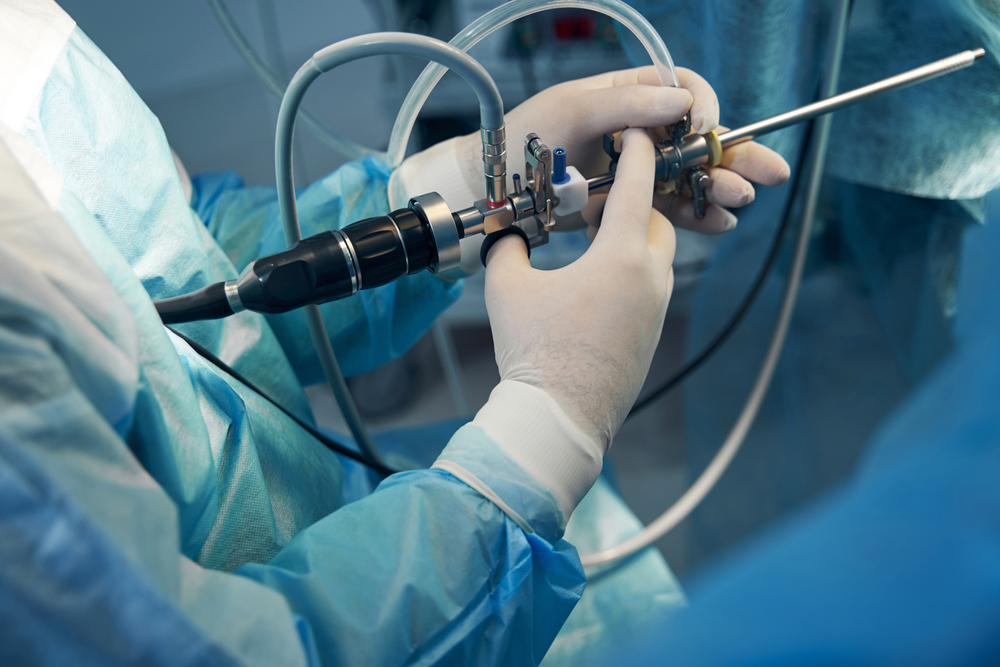
What the hysteroscope looks like is just scary:

Give Me all the Meds
I demanded double the pain and anxiety meds, and they actually gave it to me. That made me feel a little better. Of course I went straight home and googled all about HSCs and really worked myself into full freak-out mode.
The dreaded day finally came and I took half my meds as instructed and brought the rest. The first half barely took the edge off my anxiety. The nurse told me to sit on the table and take the rest of the pills, but don’t get up because I might be dizzy.
I thought, Ha! As-if! I’m so wound up they probably won’t do anything.
Well they certainly did kick in and by the time to nurse got there I was like, hey do what you gotta do, let’s get this over with.
What the HSC Felt Like
There was a sort of pinchy feeling with the shot. Not a big deal at all. And then a little cramping during the procedure, but I’ve had menstrual cramps worse than that. It was over with pretty quickly. They even took a biopsy and I didn’t feel a thing.
I was given the all-clear with a healthy normal uterus. The only odd thing was she said my uterus was “small.” I didn’t really know they came in different sizes and started wondering how small is small? So, of course, I looked it up and got some answers: http://www.wisegeek.com/what-is-considered-a-small-uterus.htm#didyouknowout
So there you have it. If you are scheduled for the HSC, it’s not terrible. It’s never fun to have needles and instruments all up in your personal business, but overall, it’s nothing to lose sleep over. Just ask for extra Xanax, and it goes by pretty smoothly!
What Is a Hysteroscopy, How Is It Performed, and Why Is It Done?
A hysteroscopy is a minimally invasive procedure that allows a doctor to examine the inside of the uterus using a thin, lighted instrument called a hysteroscope. This tool is gently inserted through the cervix, so there are no external incisions involved. It gives a clear, magnified view of the uterine lining, helping identify issues that may not be visible through standard imaging alone.
The procedure is typically performed in a doctor’s office or outpatient setting. Depending on the reason for the hysteroscopy, it may be done with little to no anesthesia, though some patients (like me) receive local or light sedation for comfort.
During the procedure, the uterus is expanded slightly using a sterile fluid or gas to allow better visibility. The doctor then carefully guides the hysteroscope to examine the uterine cavity and, if needed, perform minor treatments at the same time.
Hysteroscopy is often recommended to investigate symptoms such as abnormal bleeding, unexplained infertility, or repeated miscarriages. It can also be used to diagnose and treat conditions like uterine polyps, fibroids, adhesions (scar tissue), or structural abnormalities.
In many cases, small instruments can be passed through the hysteroscope to remove growths or correct issues during the same procedure.
One of the main advantages of hysteroscopy is that it is both diagnostic and therapeutic. This means it can identify a problem and sometimes resolve it in one step, reducing the need for more invasive surgery. Recovery is usually quick, with most people returning to normal activities within a day or two, making it a practical option for many patients seeking answers or treatment.





Leave a Reply